Flood water and clean water are not the same job. When a supply line breaks, the water is Category 1 and often dries in place; storm surge and street flooding are Category 3, carrying sewage, lawn chemicals, and bacteria, so soaked drywall, carpet pad, and insulation are cut out and discarded rather than dried. In neighborhoods like Shore Acres, Davis Islands, and the Palma Ceia area near Bayshore Boulevard, tidal surge during named storms has pushed brackish water several inches into first floors, that water is treated as contaminated regardless of how clean it looks.
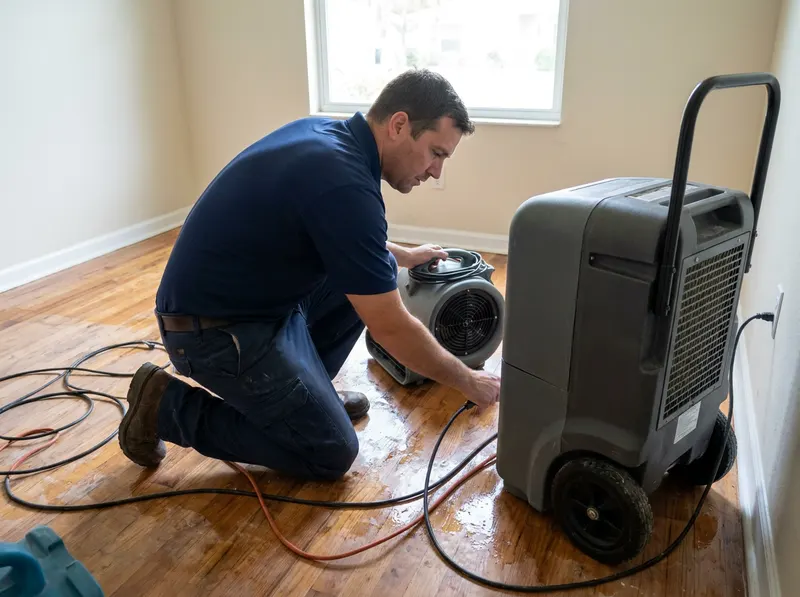
The sequence runs in a set order. First, standing water is pumped and vacuumed out. Second, unsalvageable contaminated materials, flood-line drywall, carpet, and wet insulation, are removed. Third, the structure is disinfected with an EPA-registered antimicrobial. Fourth, air movers and LGR dehumidifiers dry the framing and concrete slab, usually over 3-5 days, with moisture meters confirming wood readings drop under roughly 16% before any rebuild begins. Skipping the drying step is what breeds mold in Tampa's humidity, which averages over 70% year-round.
Decision-fit: if water entered from outside, a rising creek off the Hillsborough River, street backup near Sulphur Springs, or surge in Ruskin and Apollo Beach, treat it as flood/Category 3 and expect material removal, not just drying. If the water is a clean interior leak that never touched soil or sewage, standard water extraction and dry-out applies and material loss is smaller. Homes with a slab foundation (common across much of Tampa and Brandon) dry differently than the raised-pier bungalows in Seminole Heights, where trapped moisture under the floor needs its own drying setup. A finished space with hardwood and cabinetry costs more to restore than a tiled utility room at the same water depth.
Flood insurance and homeowner policies treat storm surge and rain flooding differently, and documentation matters: moisture logs, photos of the water line, and an itemized scope help the claim. Removal of hazardous debris, tarping, and coordination on standing-water pump-out are part of the flood scope. This is restoration and drying, it is not a general debris haul-off, and it is not mold remediation of an old, dry problem, though active mold found during drying is treated on the spot.