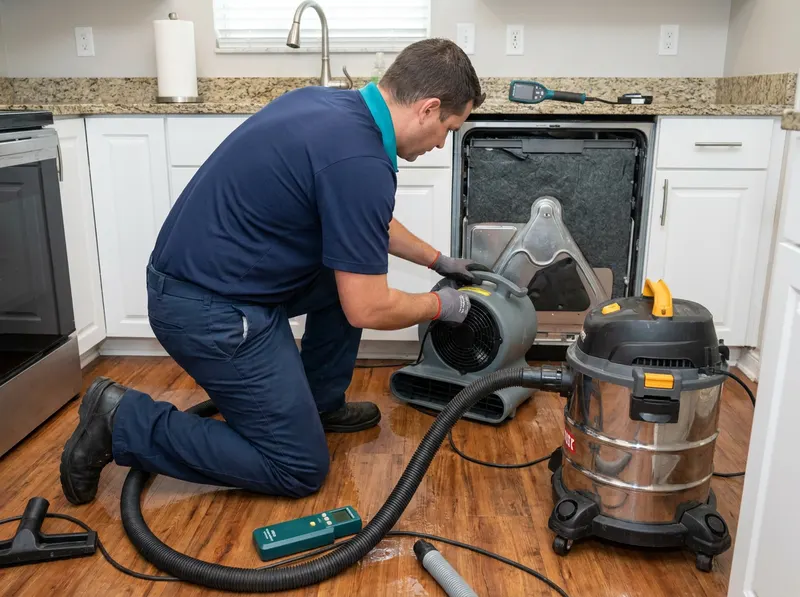
Appliance leaks differ from storm flooding because the water is usually clean supply-line water (Category 1), not contaminated groundwater, this changes both the drying method and the cost. A slow dishwasher gasket leak in a South Tampa kitchen behaves very differently from a burst water heater in a Carrollwood garage: the dishwasher soaks the toe-kick and subfloor under the cabinet run, while a water heater can push 40-50 gallons across a slab in minutes. Cleanup starts with shutting the appliance supply valve, extracting standing water, then pulling the base cabinet kick plate or a section of baseboard to reach the wet cavity behind it.
Drying decisions follow the water path. If the leak stayed in one 3-4 foot cabinet run and the subfloor reads near normal, targeted drying with a couple of air movers and a dehumidifier usually restores the materials in place. If water wicked under laminate or engineered flooring, common in the open floor plans around New Tampa and Westchase, the flooring often has to come up because moisture trapped under a vapor barrier will not release and will grow mold in Tampa's 70%+ average humidity. Cabinets made of MDF or particleboard swell permanently once saturated; solid plywood boxes can sometimes dry and stay. The trade-off is straightforward: drying in place is cheaper and faster but only works when materials can actually release moisture; tear-out costs more up front but prevents a hidden mold claim three weeks later.
Refrigerator ice-maker lines and washing-machine hoses cause a specific problem because they leak behind the appliance where no one sees it. A pinhole in a fridge water line can weep for weeks under the unit and into the adjacent flooring before a warped board or musty smell gives it away. In these cases moisture mapping with a meter across the room matters more than the visible wet spot, since the water often travels along the slab to a low point several feet away.
Appliance leak cleanup is not the same as appliance repair. Cleanup dries and restores the building, the drywall, flooring, cabinets, and framing. The appliance itself still needs a plumber or appliance technician to replace the failed valve, hose, or heater tank. Documenting the source and the extent of water is also what a Tampa homeowner's insurer typically asks for, so photos and moisture readings are recorded throughout the job.