Water damage restoration Tampa covers three ordered stages: extracting standing water, drying the structure with air movers and dehumidifiers, and repairing what the water ruined. The clock matters in Hillsborough County, mold can begin colonizing wet drywall and baseboards within 24 to 48 hours in Tampa's warm, humid air.

A water damage restoration company in Tampa is a service that extracts standing water, dries the structure, and repairs the damage after a leak, storm, or appliance failure inside a home or building.
Every service reflects the same meticulous attention to detail, whether it's a single job or a larger water damage restoration project across Tampa.

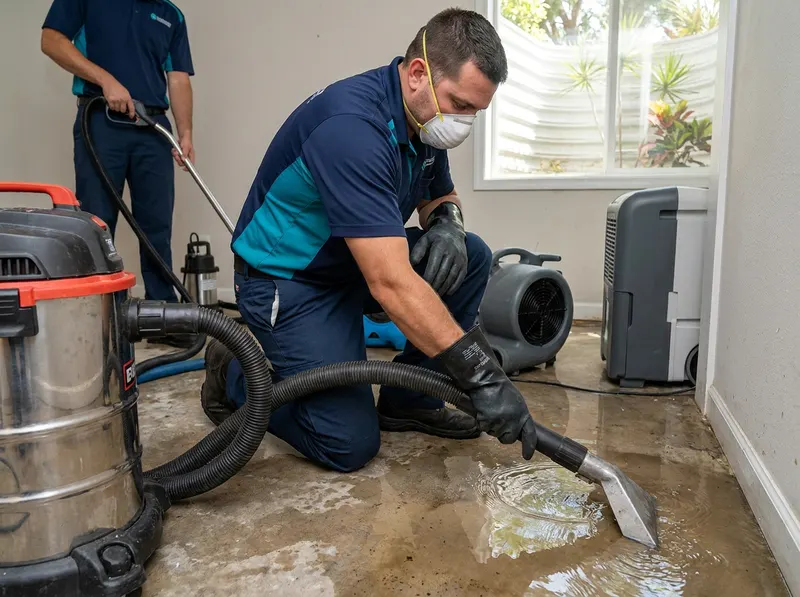
Truck-mounted and portable extractors pull standing water from floors, carpet, and pad, typically removing hundreds of gallons on the first visit. A truck-mounted unit moves water far faster than a shop vac, which matters when a supply line has run for hours across a tile floor. Fast extraction limits how deep water wicks into drywall and subfloor, where it becomes a multi-day drying problem instead of a same-day cleanup. Available 24/7 across Tampa with no minimum charge on the call-out.
Get a quote →
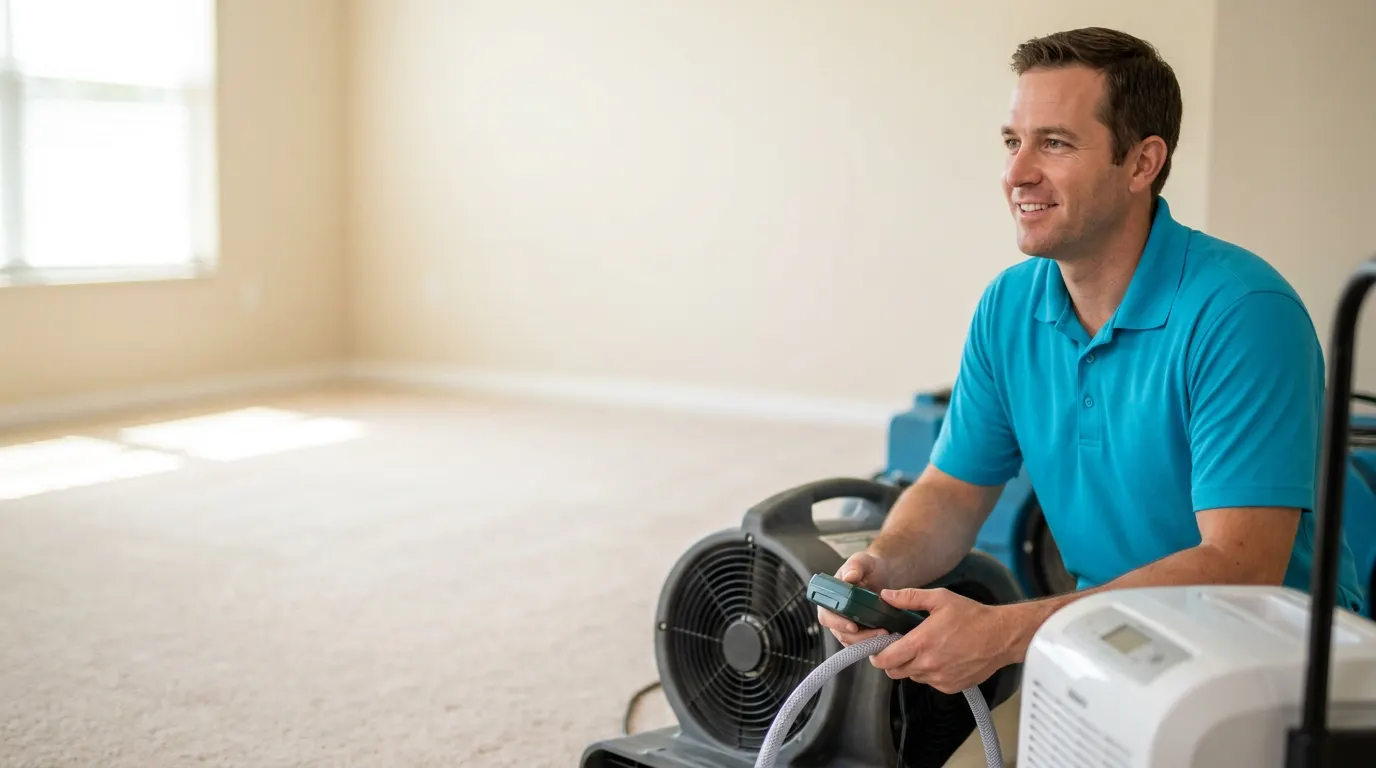
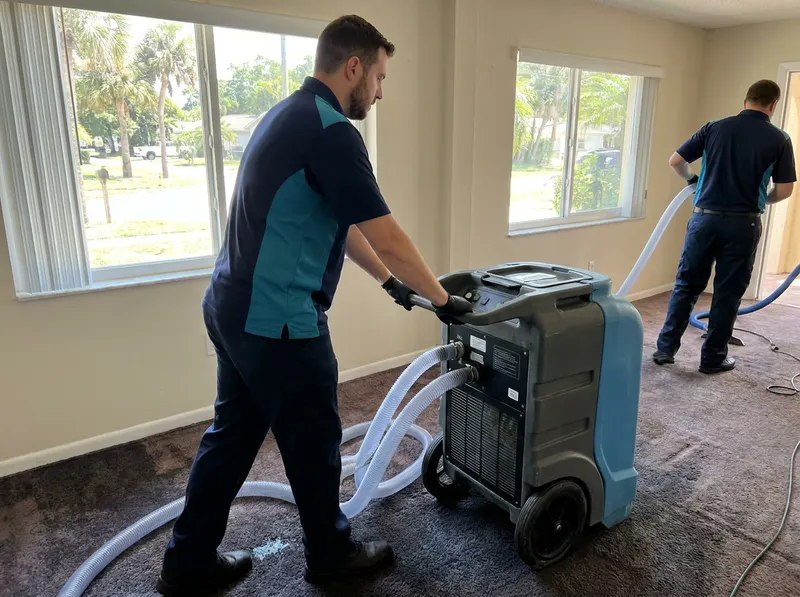
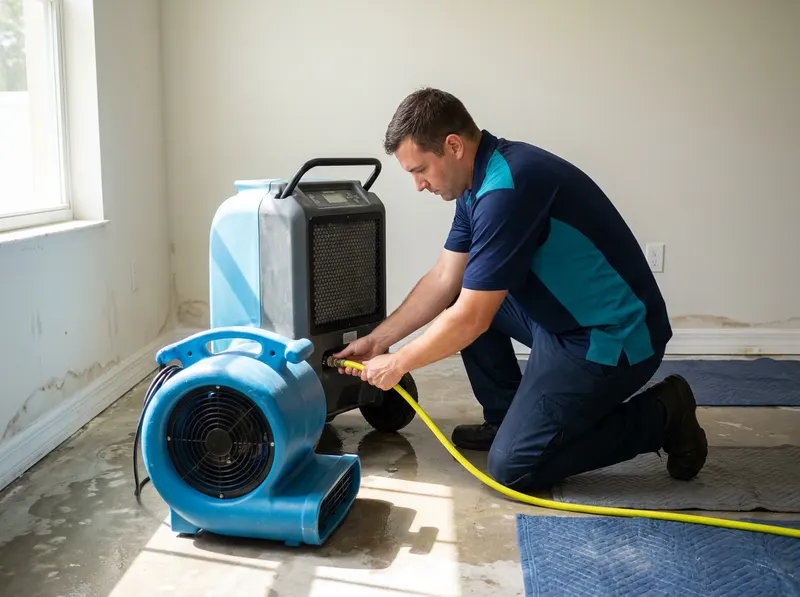
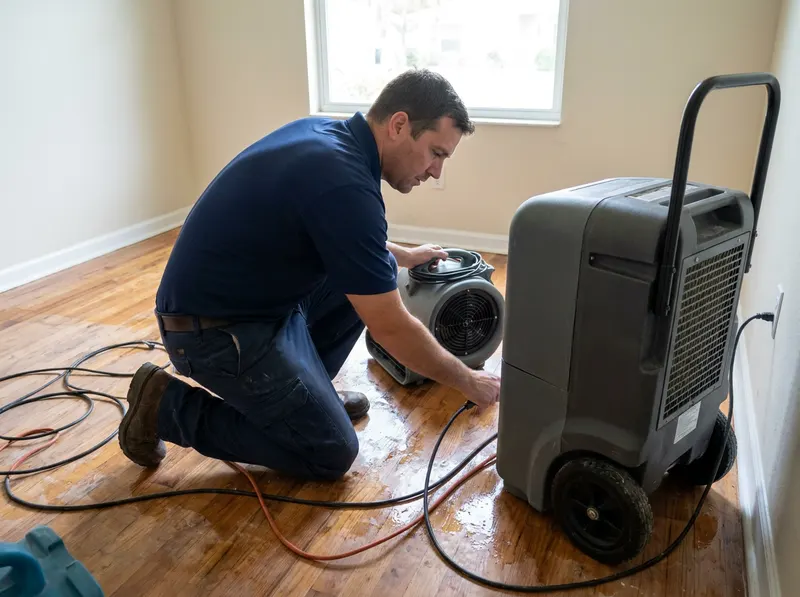
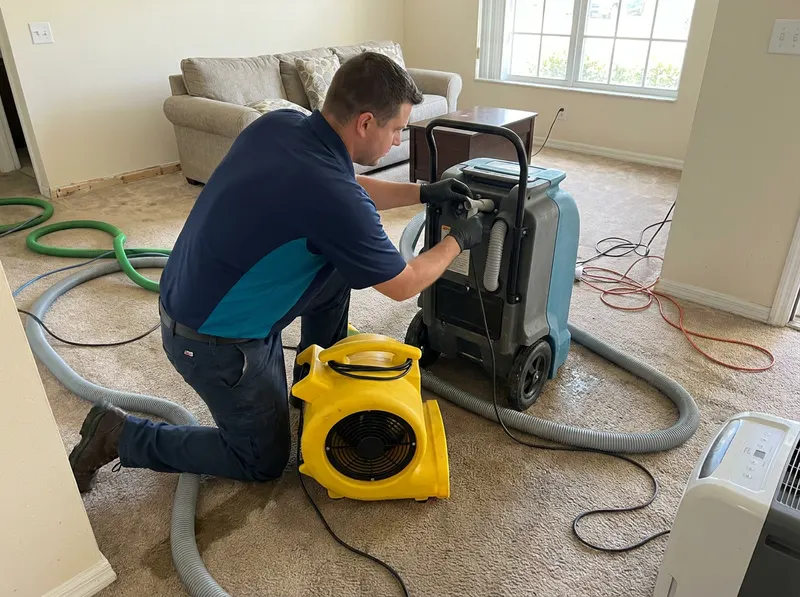
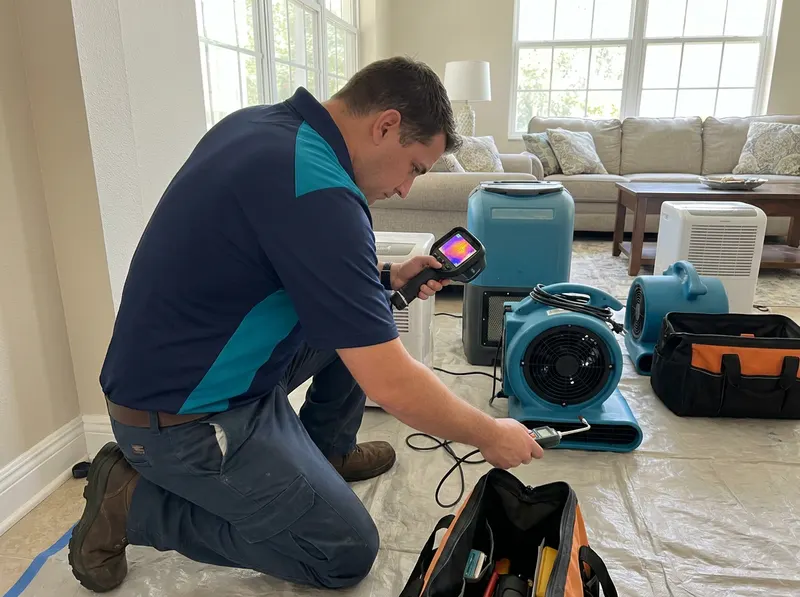
Air movers and commercial dehumidifiers dry framing, subfloor, and wall cavities, usually over 3 to 5 days depending on saturation. Moisture meters track drying progress to a documented dry standard rather than a guess, so equipment comes out only when readings confirm the structure is dry. A typical single room uses several air movers and one dehumidifier running continuously. This stage matters most in Tampa because ambient humidity near 75% slows natural evaporation, and a wall that would air-dry in a week up north can hold moisture far longer here.
Get a quote →
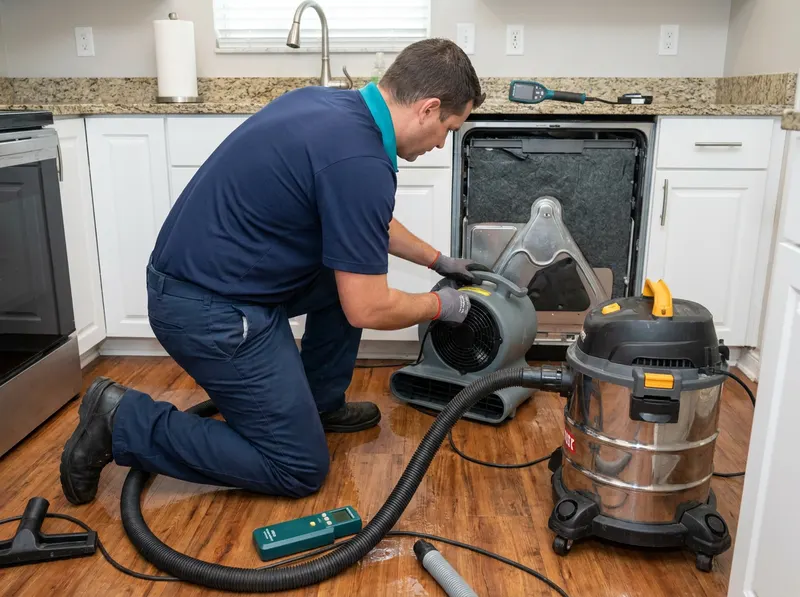
Cleanup after water heater ruptures, washing machine hose failures, dishwasher leaks, and refrigerator ice-line breaks. These are clean-water (Category 1) events when caught early, which keeps the job to extraction and drying with no material removal. A braided washing-machine hose that lets go can put dozens of gallons on the floor before anyone is home. Slow hidden leaks behind a dishwasher or under kitchen cabinets often need cavity drying and a mold check, because the cabinet toe-kick hides moisture until it warps or smells.
Get a quote →
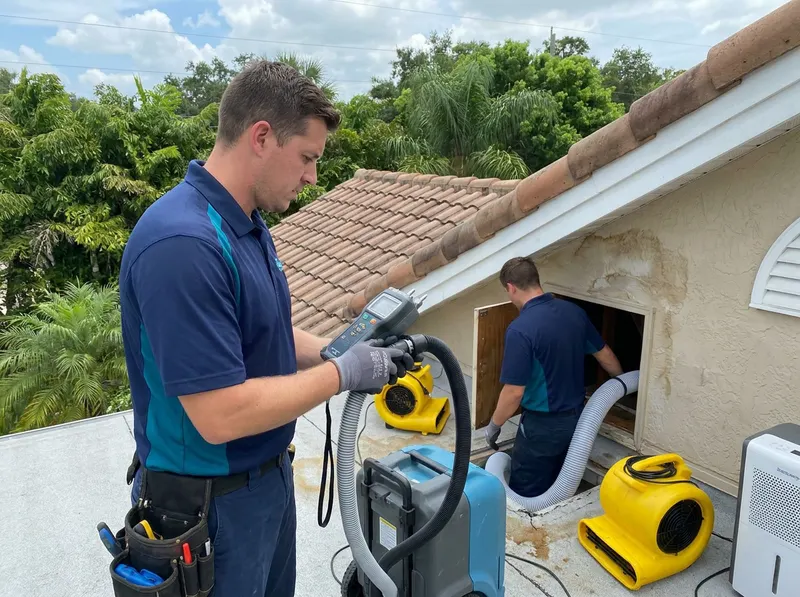
Drying and repair of ceilings, attic insulation, and wall cavities after a roof leak during Tampa's afternoon storm season. Wet blown-in insulation loses R-value and holds moisture against the ceiling drywall, so it is often removed and replaced rather than dried in place. Stained ceiling drywall is dried, then cut and patched where the water broke through. A ceiling stain that reappears after painting almost always means an active leak above that needs the roof addressed before the drywall repair holds.
Get a quote →
Response to storm surge, wind-driven rain, and street flooding from tropical systems and summer squalls that push water into low-lying homes near the bay and the Hillsborough River. Storm water is usually treated as Category 2 or 3, requiring antimicrobial treatment and removal of contaminated porous materials like carpet pad and lower drywall. Documentation with moisture readings and photos is prepared for insurance claims. Flood and storm-surge water is not the same claim as a burst pipe, which is why the source and water category are established first.
Get a quote →
Cleanup of Category 3 water from sewer backups and toilet overflows involving black water that carries bacteria and waste. Porous materials that contact contaminated water, carpet, pad, and drywall up to the water line, are removed rather than dried because they cannot be reliably sanitized. Hard surfaces are cleaned and treated with antimicrobial agents per industry standard. This is the one category where fast drying alone is never enough, and the removal scope is set by how high the water reached on the wall.
Get a quote →
The immediate loss-limiting phase: stopping the source, extracting water, and setting drying equipment before secondary damage spreads. Mitigation runs first on nearly every job, often within the first hour on site. Done quickly, it can keep a $1,000 dry-out from becoming a $10,000 rebuild. The difference between a room that needs drying and one that needs new drywall is frequently just how fast the water came out.
Get a quote →
Moisture-meter inspection of walls, floors, and cavities to confirm hidden dampness that is not visible on the surface, followed by antimicrobial application on affected surfaces. Because mold can start within 24 to 48 hours in Tampa's climate, drying to a documented standard is the core preventive measure rather than a fragrance or spray. A wall that looks dry can still read wet on a meter behind the baseboard, which is where mold tends to start.
Get a quote →You get a firm, itemized quote for your water damage restoration before any work begins, no surprises, no pressure.
Careful prep, tidy work, and a full cleanup when we are done. We treat your home and belongings like our own.
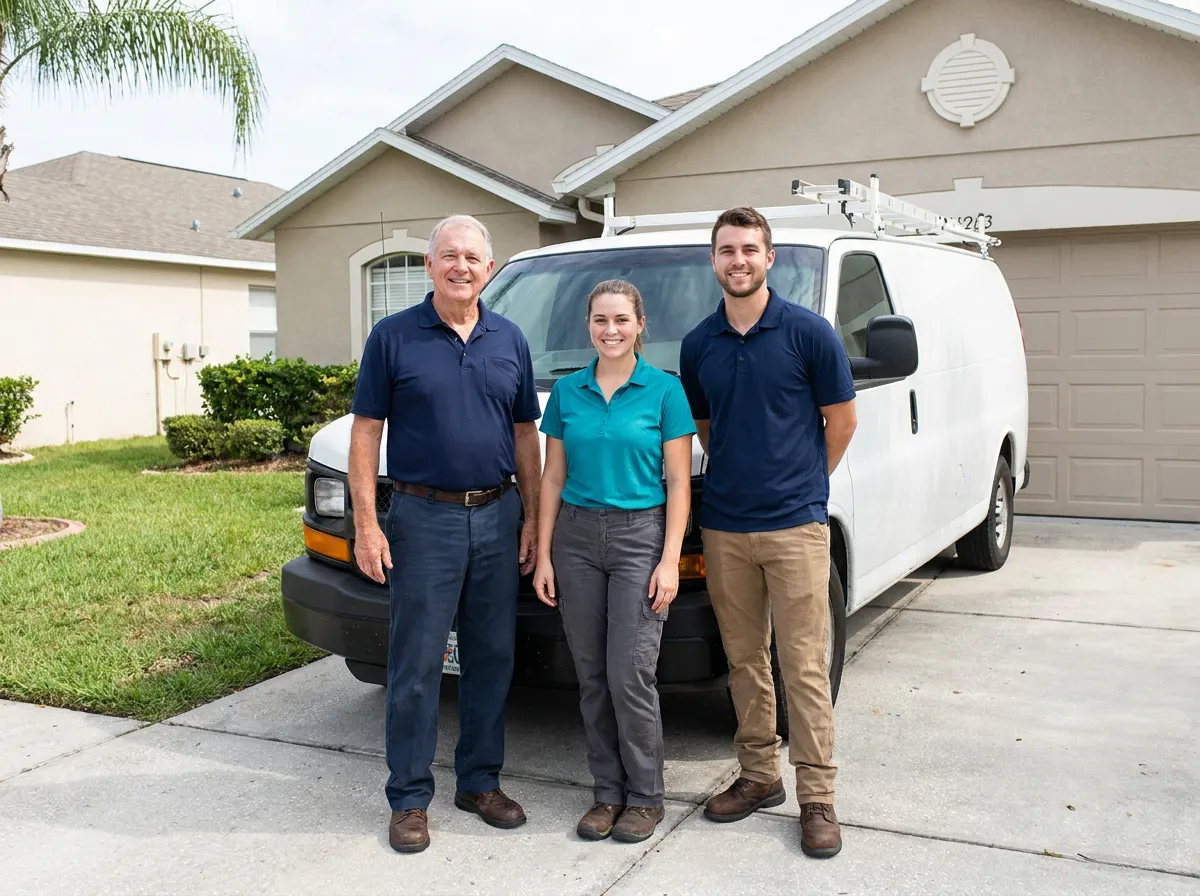
The same trusted, background-checked team from the first call to the final check.
If you have a small clean-water leak caught within hours, a supply line under a bathroom sink, water mitigation with air movers and a dehumidifier may fully dry the space in 3 days with no rebuild needed. If the water sat overnight and soaked drywall, baseboards, and carpet pad, choose full restoration: mitigation plus repair of the ruined materials. If the water is storm surge or backed-up sewage (Category 3), the job requires antimicrobial treatment and removal of porous materials that cannot be sanitized, which adds time and cost.
A single-room clean-water dry-out commonly finishes in 3 days for $500 to $1,500 in equipment time, while a multi-room job with cut-out drywall and flooring runs 7 to 14 days and $3,500 or more. The trade-off is straightforward: drying-only is faster and cheaper but only works when the water is clean and caught early; full restoration costs more and takes longer but is the only option once materials are contaminated or structurally compromised. For a slab-foundation home in Town 'n' Country where water spreads flat and wide, extraction area is larger than in a two-story Hyde Park bungalow where water often runs down into wall cavities and a ceiling below.
Every project gets a firm, written price after a free on-site visit. Ranges below for orientation.
Tell us about your water damage restoration job and we'll send a clear, written quote, usually the same day. Or just call and talk to a real Tampa pro.
(727) 660-8941
Tampa sits on low, flat ground between Tampa Bay and the Hillsborough River, and much of South Tampa, Davis Islands, and the Westshore corridor drains slowly during the June-to-November wet season. Afternoon thunderstorms and tropical systems push water into homes through roof leaks and street flooding, while year-round humidity near 75% means wet materials rarely dry on their own indoors. Older bungalows in Seminole Heights and Hyde Park often have plaster walls and original wood floors that hold moisture and reward fast extraction over a wait-and-see approach. Newer slab-foundation homes in New Tampa, Carrollwood, and Town 'n' Country tend to spread water flat and wide across tile and laminate, which enlarges the extraction footprint even when the water is shallow. Homes near the bay in Davis Islands and Bayshore face storm-surge risk during named systems, where floodwater is treated as contaminated Category 3 rather than clean water. Because Hillsborough County's rainy-season squalls can drop several inches in an hour, roof and window leaks spike in the same months, which is when drying capacity and 24/7 response matter most.
Free estimates for Tampa & the surrounding area.