Emergency Water Extraction Tampa
Extraction happens in a fixed sequence: (1) shut off the water source or confirm it is off, (2) map the wet area with a moisture meter and note the high-water line, (3) vacuum standing water with a truck-mounted…
Extraction happens in a fixed sequence: (1) shut off the water source or confirm it is off, (2) map the wet area with a moisture meter and note the high-water line, (3) vacuum standing water with a truck-mounted…
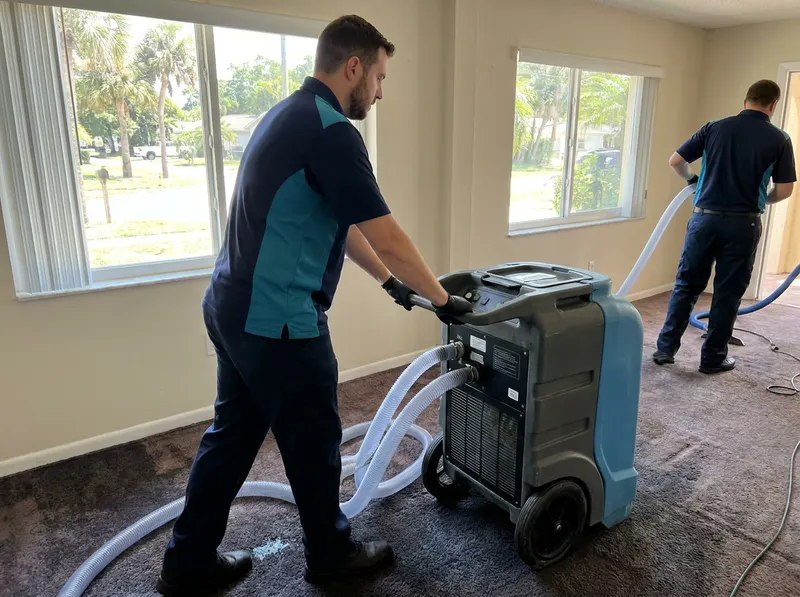
Extraction happens in a fixed sequence: (1) shut off the water source or confirm it is off, (2) map the wet area with a moisture meter and note the high-water line, (3) vacuum standing water with a truck-mounted extractor rated near 100+ inches of lift, (4) lift and dispose of saturated carpet pad, and (5) hand off to structural drying. A truck-mounted unit removes far more water per hour than a portable, which matters in Tampa's older bungalows where water travels under baseboards fast.
Tampa's water table is high and much of the ground sits only a few feet above sea level, so slab homes in South Tampa, Palma Ceia, and Davis Islands hold moisture in the slab long after the surface looks dry, meter readings, not appearance, decide when extraction is done. Wood-frame houses in Seminole Heights and Hyde Park wick water up studs, so the wet line often runs higher than the visible stain. During hurricane season, June through November, storm surge and heavy rain drive the bulk of emergency calls near the Bayshore, the Hillsborough River, and Rocky Point.
Water category drives both method and cost. Category 1 is clean supply water from a burst line or ice-maker; Category 2 (gray) is dishwasher or washing-machine discharge; Category 3 (black) is sewage backup or floodwater and requires containment and disposal, not just extraction. If the flood is clean water caught within the first several hours, extraction plus a few days of drying usually saves the flooring. If sheetrock has been wet more than 48 hours or the water is Category 3, affected drywall and pad are typically cut out and removed rather than dried, a scope handled under the broader restoration service, not extraction alone.
Extraction is not the same as full restoration: it removes the water but does not, by itself, guarantee a dry structure. The Institute of Inspection Cleaning and Restoration Certification (IICRC S500) treats extraction as phase one and drying as a separate, monitored phase measured with moisture meters over 3-5 days. Clarifying this up front prevents the common misunderstanding that a pumped-out room is a finished job.
Every job gets a firm, written price after a free on-site visit.
Tell us about your emergency water extraction job in Tampa and we'll send a clear, written quote, usually the same day.