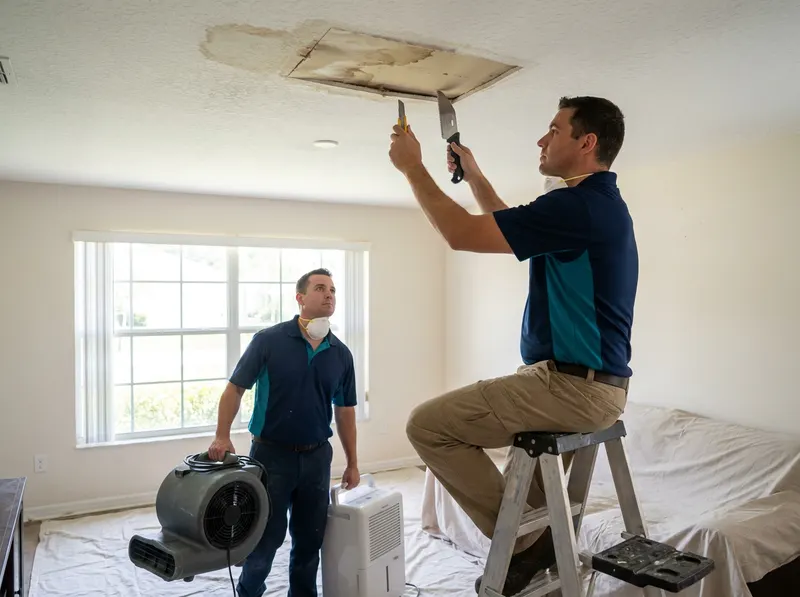
Water follows gravity, so a ceiling stain in a Tampa two-story home in Carrollwood or New Tampa usually points to a leak one floor up, a supply line, a shower pan, or a second-floor AC drain pan, while a first-floor bungalow ceiling in Seminole Heights or Hyde Park more often traces to a roof or attic problem after a summer downpour. The repair starts by finding that source; painting over a stain without stopping the water leaves the gypsum wet and brings the stain back within weeks.
A moisture meter reading tells the scope. Drywall that reads dry and shows only a surface stain can be sealed with a stain-blocking primer and repainted. Drywall that reads wet, sags, or crumbles at a fingertip has to be cut out, typically a clean rectangle back to the nearest studs or ceiling joists, so the cavity behind it can dry. In Tampa's climate, where summer indoor humidity sits high, wet gypsum left in place is a mold substrate; the standard practice is to remove board that has been saturated longer than 24-48 hours rather than try to dry it in place.
Decision-fit comes down to how wet and how wide the damage is. If the affected area is under a few square feet, dry to the meter, and structurally sound, a cut-and-patch with texture match and repaint is the smaller, faster path. If the board is sagging, the stain spans several joist bays, or the drying reveals wet insulation and wet framing, full ceiling section replacement is the sound choice, the trade-off is a longer timeline and higher cost against a repair that would otherwise fail. Popcorn and knockdown ceilings common in older Tampa homes add a texture-matching step, and homes built before 1980 may have ceiling texture that requires asbestos screening before disturbance.
How the job runs, in order: 1) locate and confirm the leak is stopped; 2) map moisture with a meter across the ceiling and adjacent walls; 3) cut out saturated drywall and remove wet insulation; 4) run air movers and a dehumidifier 2-3 days until framing reads dry; 5) hang, tape, and mud new board; 6) match the existing texture; 7) prime with a stain-blocking sealer and repaint the section or the full ceiling for an even finish. Insulation replacement, structural framing repair, and asbestos handling are separate line items priced after the cavity is opened.